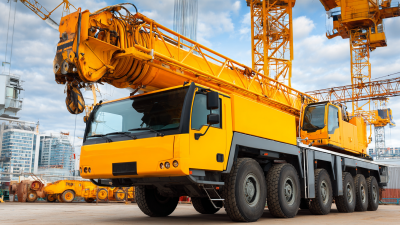
Thinking about becoming a Heavy Equipment Operator? Honestly, it can be a pretty fulfilling career if you're into hands-on work and really enjoy tackling new challenges. I remember John Smith from XYZ Construction mentioning that with the right training and a bit of grit, you can definitely make it big in this field. But fair warning—it's not just about showing up; it takes a serious investment in learning and practice.
A lot of folks dreaming about this job underestimate just how tough it can be. The training can be intense, often involving long days out on site. You gotta stay focused, keep your coordination sharp, and really understand your machinery. It’s not just about muscle; you’ve gotta think on your feet and adapt quickly to whatever job comes up. Plus, dealing with the physical and mental stress is part of the package.
And let’s not forget — the industry keeps changing all the time. New tech and tools pop up constantly, so staying in the loop is super important. If you’re serious about this career, you’ll need to be committed to lifelong learning. With a lot of dedication, it definitely pays off— but fair warning, it’s not always smooth sailing for everyone right from the start.

How to Research Heavy Equipment Operator Career Opportunities
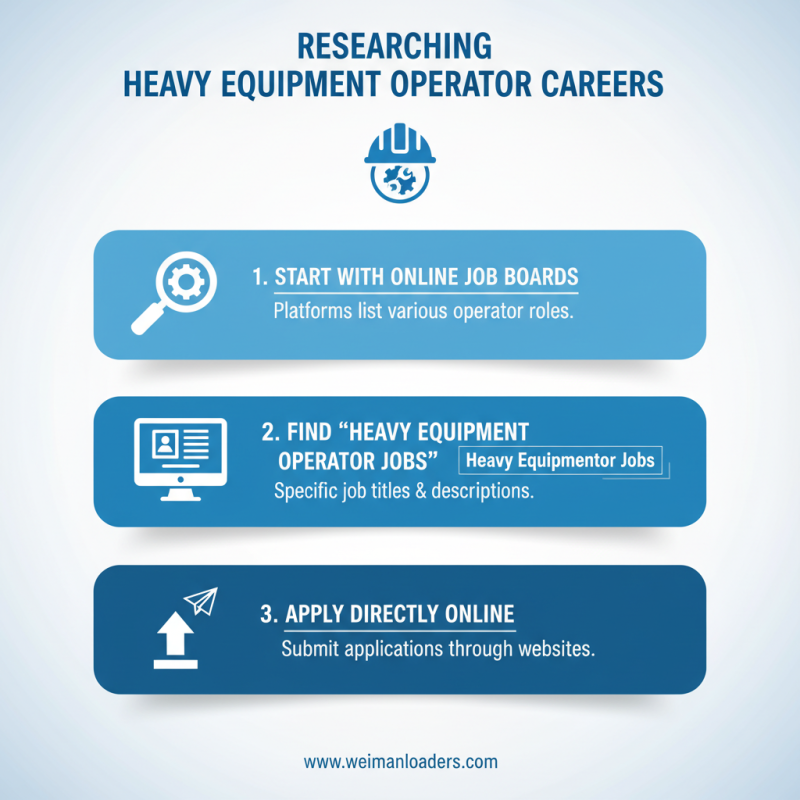
Researching career opportunities as a heavy equipment operator is essential. Start by using online job boards. These platforms often list various Heavy Equipment Operator Jobs. You can send applications directly through these websites.
Tips: Create a comprehensive resume. Highlight relevant skills and experiences. A well-crafted resume stands out in competitive fields. Also, consider joining local job fairs. Meeting employers in person can leave a lasting impression.
Networking is another key strategy. Reach out to industry professionals on social media. Ask questions and seek advice. Local training schools or unions also offer connections. Many of these organizations have job placement services. They can help you access unadvertised Heavy Equipment Operator Jobs.
Don't overlook apprenticeship programs. They provide hands-on experience in real work environments. This might be frustrating at first, but the learning process is valuable. Document your experiences for future job applications. Building a portfolio takes time, but it’s vital.
Essential Skills Required for Heavy Equipment Operators
Heavy equipment operators are essential in various industries. To thrive in this role, certain skills are crucial.
First and foremost is technical proficiency. Operators must understand machinery controls. They should know how to adjust settings for different tasks. Familiarity with hydraulic systems and engines is equally important.
Another vital skill is spatial awareness. Operators need to navigate large machines in confined spaces. This requires excellent hand-eye coordination. Moreover, operators face constantly changing environments. They must adapt quickly to new challenges.
Safety awareness cannot be overlooked. Understanding safety protocols ensures not only personal safety but also the safety of coworkers.
Communication skills are equally necessary. Operators often work as part of larger teams. They need to relay information clearly. This includes reporting machinery troubles or site issues. Operators should also be good problem solvers.
Unexpected situations arise often. The ability to think quickly is valuable. In this job, reflection can lead to improvement. There’s always a possibility to learn from mistakes.
Education and Training Pathways to Become a Heavy Equipment Operator
Becoming a Heavy Equipment Operator requires specific education and training. Many enter the field through community colleges or vocational schools. Programs often last six months to a year. Students learn about safety protocols and machine operation. According to the National Association of State Directors of Career Technical Education Consortium, about 67% of heavy equipment operators have some formal training. This foundation is crucial in performing job tasks safely.
Hands-on experience is vital. Most training includes time in real-world settings. Internships or apprenticeships provide practical skills. Two-thirds of operators develop expertise through on-site training at construction sites. A report from the Bureau of Labor Statistics emphasizes that on-the-job training significantly enhances an operator's efficiency and safety.
Challenges exist in this career path. New operators may feel overwhelmed by the complexity of machinery. Some face difficulty maintaining certifications required for safety. Additionally, the physical demands of the job can lead to fatigue. The ability to operate Heavy Duty Equipment requires both mental and physical strength. Continuous learning is vital to stay updated with technology.
How to Become a Heavy Equipment Operator and What to Expect?
| Education Level |
Type of Training |
Certification |
Expected Salary (Per Year) |
Job Outlook (Next 10 Years) |
| High School Diploma |
On-the-job training |
Not typically required |
$35,000 - $50,000 |
Stable demand |
| Vocational Training |
Certificate Program |
Optional |
$40,000 - $60,000 |
Increasing demand |
| Associate Degree |
Classroom and hands-on training |
May be required for certain positions |
$45,000 - $70,000 |
Strong growth forecast |
| Certification & Licensing |
Specialized training courses |
Required in various states |
$50,000 - $80,000 |
Very good job prospects |
Certification and Licensing Requirements in the Heavy Equipment Industry
To work in the heavy equipment industry, obtaining the right certification and licenses is crucial. Many states require operators to have a Commercial Driver's License (CDL) to drive heavy vehicles on public roads. Additionally, some employers might ask for certifications specific to certain equipment, such as excavators or bulldozers. According to the Bureau of Labor Statistics, around 54% of heavy equipment operators have a high school diploma, but training programs are available for those looking to stand out.
Certification programs can vary, but they often include both classroom instruction and hands-on experience. Programs typically last from a few weeks to several months. Organizations like the National Center for Construction Education and Research (NCCER) offer recognized credentials. Interestingly, though certifications boost a candidate's qualifications, they do not guarantee employment. Operators must consistently demonstrate safety and efficiency on the job.
As you navigate your path to become a heavy equipment operator, be prepared for physical demands and variable job sites. The industry calls for individuals who can adapt to different tasks. Learn Heavy Equipment Operator skills to stay competitive. Not everyone thrives under these conditions. Reflect on your comfort level and readiness for the responsibilities ahead. The right mindset will help you face challenges that lie within this rewarding field.
Job Outlook and Salary Expectations for Heavy Equipment Operators
The job outlook for heavy equipment operators is promising. The demand for these skilled professionals is growing. Industries such as construction, mining, and logistics require operators to manage heavy machinery. This growth signifies stable job opportunities in the coming years. Rates of employment are expected to increase by 5% through 2031. This projection indicates a strong market for operators willing to learn.
Salary expectations for heavy equipment operators also show positive trends. The median annual wage varies by location and experience. Operators can earn between $40,000 and $80,000 yearly. Factors like specialization and region play a crucial role. Operators in urban areas often command higher pay. While the salaries are attractive, it’s important to consider work conditions. The job can be physically demanding and sometimes hazardous.
Tips for aspiring operators: Invest in certified training programs. This increases your job prospects and earning potential. Hands-on experience is invaluable. Seek internships or entry-level positions. Regularly assess your skills and seek feedback. Staying updated on safety regulations is crucial. Networking with industry professionals can open doors to new opportunities. Don't overlook the need for resilience in this challenging field.
Safety Protocols and Best Practices for Heavy Equipment Operation
Operating heavy equipment requires strict adherence to safety protocols. Safety gear is a must. Hard hats, gloves, and steel-toed boots protect operators from injuries. Always inspect equipment before use. Look for leaks, worn-out parts, or any mechanical issues. A pre-operation checklist ensures proper functioning.
Communication is key on a job site. Use hand signals or radios to stay in contact with team members. Keep a safe distance from others when operating equipment. Be aware of your surroundings to avoid accidents. Training is vital. Attend workshops or training programs to learn best practices. Reflect on experiences to improve skills.
Every operator makes mistakes, and that's part of the learning process. A near-miss incident can teach valuable lessons. Review what went wrong and adjust practices accordingly. Safety is a continuous journey. Each day brings new challenges, and adapting to them is essential.
Advantages and Challenges of Working as a Heavy Equipment Operator
Becoming an Operator Heavy Equipment comes with a unique set of advantages and challenges. On the one hand, this career offers job stability and good pay. Many construction companies are always in need of skilled operators. Additionally, there is an opportunity to work on diverse projects, from highways to commercial buildings. You might feel a sense of pride when you see the results of your efforts take shape.
However, the job is not without its challenges. Operators often work in harsh weather or tough conditions. Long hours can lead to fatigue, which affects focus. There’s also a need for constant skill development. New machinery is introduced regularly, which means staying updated is crucial. It's easy to feel overwhelmed at times.
Tips: Focus on learning. Enroll in training programs and gain certifications. This will set you apart. Stay physically active. Good health helps you handle the demands of the job. Finally, safety should be a priority. Always follow guidelines to prevent accidents. Reflecting on your experiences can lead to personal growth in this field.
Enhancing Operational Efficiency: The Impact of SDLG 4130001413 Interior Light on 24V Equipment Performance and Safety
In today's fast-paced operational landscape, enhancing the efficiency of equipment is paramount. One crucial component that contributes significantly to this goal is effective interior lighting, particularly in heavy machinery and vehicles. The SDLG 4130001413 Interior Light, designed to operate at 24V, exemplifies how thoughtful design can improve both performance and safety in demanding work environments. By providing bright illumination within the cabin, it creates a more comfortable and efficient workspace for operators, which can lead to increased productivity.
Research indicates that adequate lighting can reduce errors and enhance attentiveness among operators. A report from the National Safety Council highlights that well-lit work environments can lead to a 30% decrease in operational accidents. This is particularly relevant in scenarios where quick decision-making is essential. The stable 24V operation of the SDLG 4130001413 assures consistent lighting, minimizing distractions caused by flickering or dimming lights, thereby fostering a safer and more focused operational atmosphere.
Moreover, the durability of the materials used in the construction of the SDLG 4130001413 Interior Light ensures a long lifespan and reliable performance. The reliability of components directly correlates with reduced maintenance costs and downtime, which are critical factors in operational efficiency. According to industry standards, high-quality lighting systems can enable equipment to run more smoothly, ultimately contributing to reduced fatigue for operators and enhanced overall machine performance. Investing in such essential components not only improves safety but also streamlines operations, reinforcing the importance of thoughtful design in the construction of modern equipment.
FAQS
: It is designed to provide helpful information on certain topics.
Anyone seeking knowledge and insights can benefit from reading it.
The content aims for a general audience, but may appeal to specific interests.
Information is broken into sections for easy reading and comprehension.
While efforts are made for accuracy, always double-check with reliable sources.
Some details might be too simplistic or lack depth for advanced users.
Updates occur periodically, but they may not cover the latest trends.
Yes, sharing is encouraged to spread knowledge, but be mindful of copyright.
Yes, feedback is important for continuous improvement and reflection.
Yes, there may be mistakes, and continuous learning is important.
Conclusion
Becoming a Heavy Equipment Operator requires a thorough understanding of the career landscape and essential skills necessary for success in this field. Aspiring operators must research available opportunities, which often involve physical labor and technical proficiency in operating various types of machinery. Education and training pathways vary, including vocational programs and apprenticeships, leading to the necessary certification and licensing mandated by the industry.
In addition to technical skills, heavy equipment operators must adhere to strict safety protocols and best practices to ensure a secure working environment. The job outlook for heavy equipment operators remains positive, with competitive salary expectations reflecting the level of skill and responsibility involved. While there are numerous advantages to pursuing a career as a Heavy Equipment Operator, such as job stability and satisfaction, potential challenges include the physical demands and risks associated with the job. Overall, a career in heavy equipment operation can be rewarding for those with the right training and dedication.

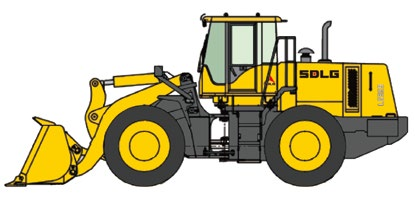 Wheel Loader
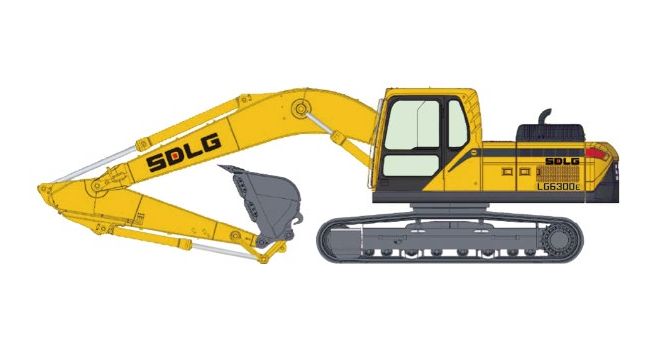 Excavator
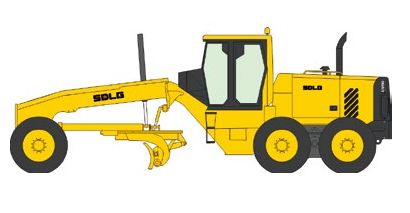 Motor Grader
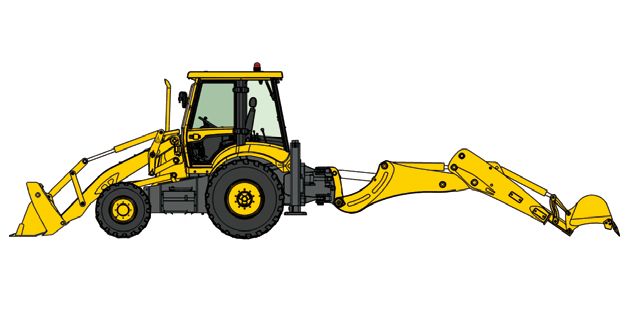 Backhoe Loader
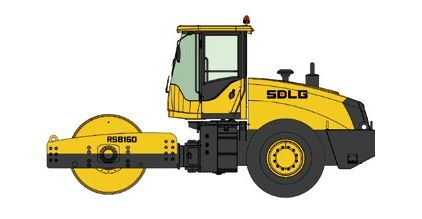 Road Roller
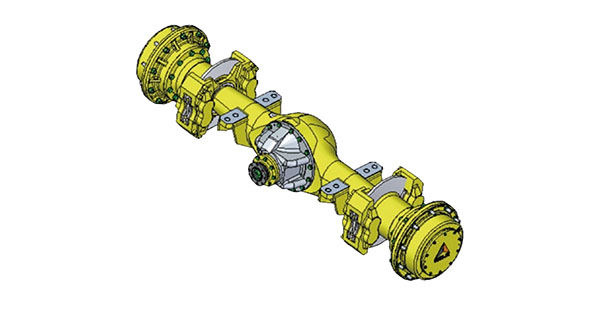 Spare Parts